Rules
Every puzzle in Sudoku Daily, except for the extra cage rule in Killer, is the same idea. The grid has 9 rows, 9 columns, and 9 boxes. A box is a 3×3 block. Thick lines on the board are the box edges.
When the puzzle is finished, all of these are true at once:
- Each row contains 1, 2, 3, 4, 5, 6, 7, 8, and 9, with no repeats.
- Each column contains those same digits, with no repeats.
- Each box contains those same digits, with no repeats.
Digits that were printed at the start are clues. You fill only the empty cells. A digit can appear again somewhere else on the board. It cannot appear again in the same row, the same column, or the same box as a copy of itself.
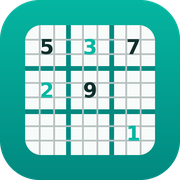
The diagram below is not a puzzle from the game. It only shows where a few clues sit, so the words “row”, “column”, and “box” point at something visible. The top-left box contains 2, 5, and 7. The top row contains 2, 6, and 3. Column 1 contains 2, 8, 4, and 7. None of those groups repeats a digit, which is the same test you apply to a real board.
A useful order is to scan the row, column, or box that already has the most clues. Fewer empty cells means fewer digits left to try. The next page, Notes, is how you write those leftover digits down without committing to them.